The Complete Guide to RCS Marketing for Online Stores
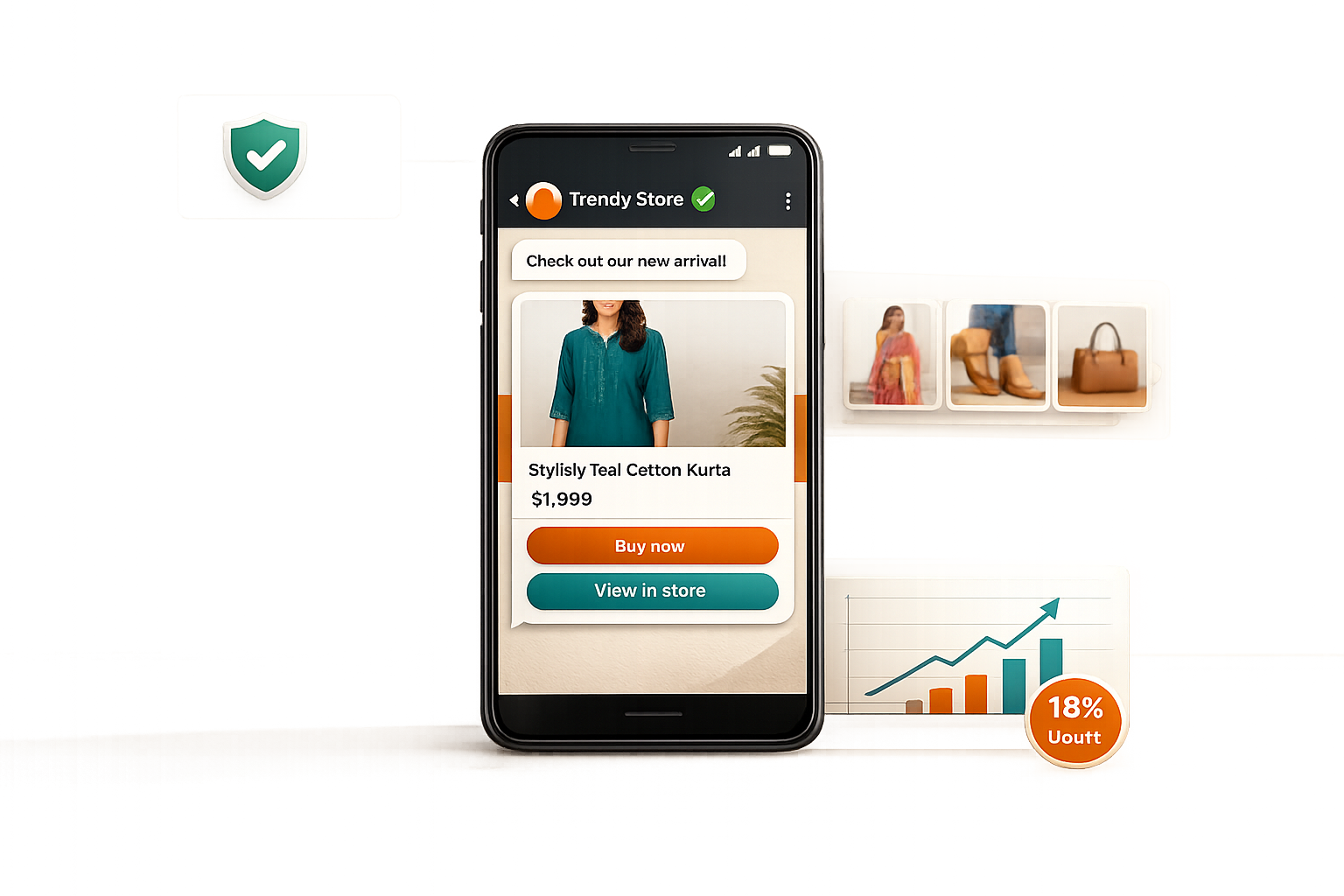
RCS (Rich Communication Services) is transforming how online stores in India connect with customers. It upgrades traditional SMS by enabling rich, interactive messages with images, videos, carousels, and "Buy Now" buttons - delivered directly to native messaging apps without requiring downloads. With verified sender profiles, RCS builds trust and significantly outperforms SMS in engagement and conversions.
Key Highlights:
- Engagement Boost: RCS messages have over 90% open rates, 3-7x higher click-through rates, and 25% response rates compared to SMS's 1%.
- Massive Growth: RCS messaging in India is projected to grow from 32 billion to 226 billion messages by 2026.
- Broad Reach: With 650M Android users in India and iOS 18 now supporting RCS, nearly all smartphone users can be reached.
- Interactive Features: Rich visuals, verified branding, and quick-reply buttons simplify shopping and build trust.
- Proven Results: Brands like BigHaat and Comex have seen 3x click-through rates and over 100% revenue boosts using RCS campaigns.
Why RCS is Better for E-commerce:
- Enhanced Messaging: High-resolution media, interactive buttons, and verified branding make RCS stand out.
- Seamless Experience: Customers can shop, track orders, or provide feedback directly within the message thread.
- Better ROI: While costlier upfront, RCS delivers higher conversions, reducing cost per acquisition.
Getting Started:
Use platforms like Messagesuite to launch RCS campaigns for promotions, abandoned cart recovery, or order updates. Combine RCS with SMS and WhatsApp for a robust omnichannel strategy, leveraging analytics to optimise performance.
Conclusion: For Shopify store owners in India, RCS is a powerful tool to drive engagement, build trust, and increase sales. With its growing adoption and support across devices, now is the time to integrate RCS into your marketing strategy.
How to Use RCS & AI-Powered Text Messaging for E-Commerce Sales
RCS vs SMS: What's Different for E-commerce
RCS vs SMS Feature Comparison for E-commerce
If you run a Shopify store in India, understanding the differences between RCS and SMS can help you choose the right messaging strategy. Both methods reach customers on their mobile devices, but the experience and results they offer are worlds apart.
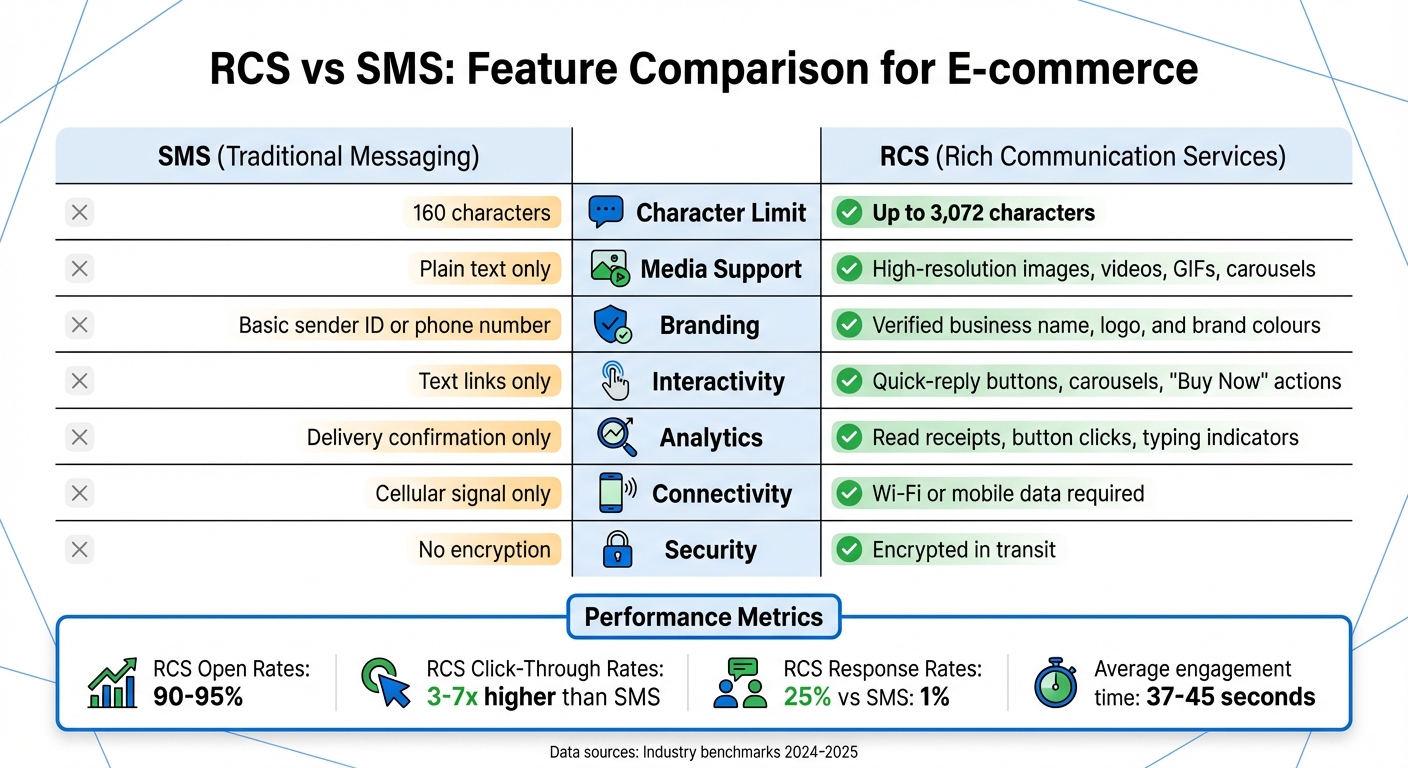
Feature Comparison: RCS and SMS
Here's a quick look at how RCS compares to traditional SMS on key metrics that matter for online retailers:
| Feature | SMS | RCS |
|---|---|---|
| Character Limit | 160 characters | Up to 3,072 characters |
| Media Support | Plain text only | High-resolution images, videos, GIFs, carousels |
| Branding | Basic sender ID or phone number | Verified business name, logo, and brand colours |
| Interactivity | Text links only | Quick-reply buttons, carousels, "Buy Now" actions |
| Analytics | Delivery confirmation only | Read receipts, button clicks, typing indicators |
| Connectivity | Cellular signal only | Wi-Fi or mobile data required |
| Security | No encryption | Encrypted in transit |
These features give RCS a clear edge over SMS, especially for e-commerce campaigns.
Why RCS Delivers More for E-commerce
The numbers speak for themselves. In April 2019, Club Comex saw a 115% revenue boost with their RCS campaign compared to SMS. Click-through rates ranged from 7.9% to 20.6%. Similarly, Bodemer Auto's Black Friday 2024 campaign achieved a 7.7% click-through rate, a staggering 1,700% improvement over their SMS campaign running at the same time.
What makes RCS so effective? It’s all about the experience. Rich media, like high-resolution images and carousels, combined with verified branding, makes your messages stand out. Customers are more likely to engage when they see your logo, brand colours, and high-quality visuals. Plus, verified sender profiles reduce the risk of phishing, which remains a significant concern in India.
Interactive features also make a big difference. Instead of sending a plain text link to recover an abandoned cart, RCS lets you show a carousel of the actual products with a "Complete Purchase" button. There’s no need for customers to download an app or take extra steps. This simplicity is a big reason why RCS achieves response rates of about 25%, compared to just 1% for SMS.
As Gupshup highlights:
"RCS messaging helps boost marketing conversions up to 10x compared to traditional SMS campaigns".
While RCS may cost more upfront, the return on investment often justifies the expense. With click-through rates three to seven times higher and customers spending 37–45 seconds engaging with your content, the cost per conversion tends to be much lower. For Indian e-commerce brands, this is a game-changer in a market where standing out in crowded inboxes is critical.
With these performance advantages in mind, the next sections will dive into how you can implement RCS effectively for your online store.
RCS Features That Matter for Online Stores
RCS is reshaping how Shopify stores connect with customers, offering app-like experiences directly within the native messaging app. No need for downloads or extra steps - just seamless, engaging conversations. These standout RCS features - rich visuals, smooth interactions, and trusted branding - are key to building a strong omnichannel strategy for Shopify retailers in India. Let's dive into how these features make a difference.
Rich Media Messaging
RCS goes beyond plain-text SMS by enabling you to send high-resolution images, videos, GIFs, and product carousels that bring your products to life. Customers can explore fine details like fabric textures, colours, and intricate designs that text alone can't convey. For example, Nespresso used rich media carousels during a holiday campaign, achieving a 73% open rate. These swipeable cards let customers browse multiple products, gift guides, or categories - all within one message thread - essentially turning their inbox into a mini-storefront.
But it’s not just about visuals; RCS also simplifies how customers interact with your content.
Interactive Customer Experiences
With RCS, you can include one-tap buttons like "Buy Now", "Track Order", or "Gifts Under ₹3,750", making it easier for customers to take action without extra steps. This streamlined process reduces drop-offs and speeds up conversions. Additionally, features like quick replies, polls, and forms allow you to gather feedback or guide customers through product choices - all within the same chat. These interactive tools make shopping more engaging and personalised.
And to enhance customer confidence, RCS ensures your branding is front and centre.
Verified Sender and Branding
RCS replaces anonymous sender IDs with your verified brand name, logo, and badge, building immediate trust. This is especially important in India, where over 50,000 smishing complaints were reported in 2025. As SaleCycle highlights:
"RCS signals trust and authenticity. Instead of anonymous shortcodes, businesses appear with their brand name, logo and verification badge."
This verified presence makes a big impact - 71% of consumers are more likely to engage with a branded RCS message compared to an SMS from an unknown number. During high-traffic shopping seasons when scams are common, this added layer of trust helps your messages stand out as secure and reliable.
How to Set Up RCS with Messagesuite for Shopify
First, configure your RCS Service Provider and whitelist your templates. This step ensures your brand's logo and colours are verified, helping to establish trust with your customers. Once this setup is complete, you're ready to design and launch impactful RCS campaigns.
Creating RCS Campaigns in Messagesuite
To start, click the 'Plus' icon in the RCS hub and choose from four campaign types. Each type is designed to make the most of RCS's rich media features:
- One-time: Perfect for standalone offers like flash sales.
- Triggered: Event-based campaigns, such as abandoned cart recovery.
- Recurring: Ideal for automated cycles like subscription reminders.
- Transactional: For updates like order confirmations or shipping notifications.
Next, name your campaign and define your audience. Use single or combined segments based on customer behaviour, purchase history, or device type. The 'Remove Duplicates' feature ensures no customer receives the same message twice. You can either send your campaign immediately or use the 'Send Intelligently' option, which schedules delivery at optimal times based on each customer's engagement history.
Choose a pre-approved template - text, image, video, or product carousel - and customise it with customer-specific attributes like name, last purchase, or loyalty status. Make sure to whitelist links used in 'Buy Now' buttons with weurl.co or your custom domain. Before launching, preview your message using live customer data and create up to five variations for A/B testing. Enable Conversion Tracking by selecting an event (e.g., a purchase) and setting a conversion deadline (default is 7 days). You can also add a control group to compare performance against organic behaviour.
Combining RCS with Other Marketing Channels
Once your RCS campaigns are ready, integrate them with other channels for a smooth omnichannel marketing strategy. RCS excels as a visually rich medium, while SMS is great for urgent updates, and WhatsApp handles two-way conversations. For example, during a festival sale, you could send an SMS teaser, follow it with an RCS message showcasing a product carousel, and use WhatsApp to address customer queries - all managed from Messagesuite's unified dashboard.
For abandoned cart recovery, try this sequence: send a WhatsApp message immediately after the cart is abandoned, follow up with an SMS offering an incentive 30 minutes later, and then send an RCS message with high-resolution product images and a one-tap checkout button after 2 hours. This approach has been shown to increase conversion rates by up to 287%. Additionally, data from RCS interactions - like which carousel card a customer clicks - can be used to create custom audiences for retargeting on platforms like Facebook or Instagram.
During major shopping events such as Diwali or Valentine's Day, coordinate your messaging across channels. Use WhatsApp for early awareness, RCS for premium product launches with interactive carousels, and SMS for last-minute reminders. This integrated approach enhances your store's presence and drives better results.
sbb-itb-e5ef79e
RCS Campaign Examples for Indian Online Stores
Using RCS for Sales and Promotions
BigHaat, an agri-tech platform, turned to RCS campaigns to connect with farmers by providing localised crop insights. They used rich media carousels that highlighted seasonal inputs tailored to crop cycles, specifically targeting Telugu-speaking farmers in Andhra Pradesh and Telangana. This approach led to impressive results: a 103% boost in return on ad spend (ROAS), a 3x jump in click-through rates compared to regular SMS, and a two-thirds drop in cost per order.
"BigHaat's RCS campaigns have revolutionized our communication strategy, engaging the farmer community. The threefold increase in click-through rates reflects the effectiveness of this approach." - Pankti Parmar, Organic & MarTech Lead, BigHaat
Fashion and lifestyle brands have also embraced RCS, especially during festive seasons like Diwali and Dussehra. These campaigns often include product carousels showcasing items with prices in ₹ and a 'Buy Now' button, allowing customers to shop directly from the message thread. Verified sender profiles add trust, making these campaigns even more engaging and effective.
RCS doesn't just stop at promotions; it has also reshaped customer support.
Improving Customer Support with RCS
RCS has extended its impact by enhancing customer support with real-time, verified interactions. Indian online stores now use RCS to handle customer queries and provide order updates seamlessly. Verified messages, complete with brand colours and logos, are used to confirm Cash-on-Delivery (COD) orders - a critical feature in India. This verification helps reduce Return to Origin (RTO) rates by ensuring customers genuinely intend to accept their deliveries.
The adoption of RCS for transactional purposes has skyrocketed in India. From 0% in April 2024, transactional RCS traffic surged to 61.4% by December 2024. These messages now handle functions like order confirmations, shipping updates, and delivery rescheduling. Customers can use suggested reply buttons, such as "Track Order" or "Talk to Support", to get quick and intuitive assistance directly from the message, making the support process faster and more user-friendly.
Tracking RCS Campaign Performance with Messagesuite
Key Metrics for RCS Campaigns
RCS (Rich Communication Services) goes beyond traditional SMS by offering detailed engagement metrics that help businesses measure campaign success. For Indian online stores, keeping an eye on Revenue Per Message (₹) and Average Order Value (₹) can reveal if your investment in rich media is delivering returns.
Some essential metrics to monitor include:
- Delivery Rate: The percentage of messages successfully reaching customers' devices.
- Read Rate: Tracks when customers open your message.
- Click-Through Rate (CTR): Measures interactions with buttons like "Shop Now" or "Track Order".
- Conversion Rate: Tracks purchases completed after interacting with the message.
- Clicks: Counts user interactions with carousels or action buttons.
- Conversions: Focuses on purchases made within 36 hours of receiving the message.
Another critical metric is the Opt-Out Rate. A high opt-out rate could indicate that your messages are either too frequent or poorly targeted, potentially alienating your audience.
For example, Club Comex, a loyalty programme by the Mexican paint retailer Comex, shifted from SMS to RCS in 2024. Their sales-driven campaign saw a 7.9% click-through rate, a significant leap from the 2% average with SMS. Meanwhile, a content-focused campaign achieved a 20.6% CTR, resulting in a 115% revenue increase compared to their earlier SMS campaigns.
These metrics are seamlessly integrated into Messagesuite's real-time analytics dashboard, providing businesses with instant performance insights.
Using Messagesuite's Analytics Dashboard
Messagesuite's analytics dashboard offers a comprehensive view of your RCS campaigns from start to finish. It tracks every stage of the funnel - from Sent to Delivered, Read, Clicked, and Converted - allowing you to identify where customers drop off.
For instance:
- If Read Rates are high but Click Rates are low, you might need to refine your call-to-action (CTA) buttons.
- If Clicks are strong but conversions lag, the issue could lie in your product page or checkout process.
The dashboard also enables side-by-side comparisons of message variations, helping you determine which images, carousels, or CTAs generate better results. You can further filter performance by location, time of day, and device type to identify your top-performing segments.
For Indian businesses, especially those using Cash-on-Delivery (COD) verification messages, monitoring delivery failures is crucial. It helps maintain a strong sender reputation and addresses technical issues, such as personalisation errors, promptly.
During high-traffic shopping seasons like Diwali, these insights allow you to pause campaigns that aren't performing well and focus on the ones driving the best results.
What's Next for RCS in Indian E-commerce
RCS Adoption Trends in India
India is witnessing a surge in RCS adoption. The market is projected to grow at an impressive 45% CAGR between 2025 and 2027, with the number of active users expected to cross 100 million by late 2026. This growth is largely driven by India's widespread Android usage - 96% of Android devices globally now support RCS - and the increasing digitalisation of retail and direct-to-consumer (D2C) brands.
The numbers speak volumes. For instance, during Black Friday 2024, RCS interactions in India saw a staggering 1,162% increase. This shows that Indian shoppers are eager for richer and more interactive shopping experiences.
Key features like verified sender identities, which include brand logos and checkmarks, are addressing spam concerns and building trust instantly. With TRAI's 2025 regulations mandating traceability, verified RCS has become a more reliable choice compared to unverified SMS. The results are clear: brands using RCS report read rates of 90–95% and click-through rates averaging 19%, far outperforming the 3–5% rates of traditional SMS.
"RCS isn't an either-or decision. It's an and. Smart businesses are using SMS for reach, RCS for engagement, and WhatsApp for service. The magic happens when you connect them all." – Neha Sharma, Director of Product Marketing, Sinch
To stay ahead, Shopify store owners should gear up for the next wave of RCS advancements, which promise even more interactive and secure messaging options.
Preparing for RCS Developments
As RCS adoption grows, adapting to its evolving features is crucial for sustained success. For Shopify owners, these developments not only enhance customer engagement but also bolster brand credibility in a competitive landscape.
With iOS 18 now supporting RCS, the gap between Android and iOS users is narrowing. However, iOS integration is still a work in progress, so it’s wise to keep message descriptions concise - around 115 characters - to prevent cutoffs on Apple devices.
Get verified early. Register your business in the RCS ecosystem to display your brand logo and verified badge. This process requires GST certificates, business registration documents, and proof of website ownership. To ensure seamless communication, implement fallback systems that switch to SMS when RCS isn't supported. This strategy is especially valuable in India, where data connectivity can vary significantly across regions. Platforms like Messagesuite's Shopify marketing features can handle this automatically, using SMS for critical OTPs, RCS for engaging marketing campaigns, and WhatsApp for customer service.
With the expansion of 5G - expected to reach 500 million connections by 2027 - brands can start exploring advanced features like high-quality video and AR try-ons within RCS messages. Another area to focus on is regional language support. Using Unicode to communicate in languages like Hindi, Tamil, and Telugu can help brands connect more deeply with India's diverse audience.
"In 2026, RCS messaging adoption is not about chasing trends. It's about recognizing a simple truth: Messaging is becoming a branded, interactive experience - not a one-way notification." – MDS Digital Media
Conclusion
RCS marketing is proving to be a game-changer for Indian online stores aiming to make their mark in a highly competitive digital space. The numbers speak for themselves: RCS campaigns achieve an average click-through rate of 19%, far surpassing the 3–5% typically seen with SMS. Read rates hover between 90–95%, and conversion rates can see an increase of up to 20%. These are results that can directly influence your revenue.
For Shopify store owners, RCS offers a clear advantage. It blends the wide reach of SMS with the engaging, interactive features that today’s customers expect. Features like verified sender profiles inspire trust, product carousels turn messages into virtual storefronts, and interactive reply buttons make customer interactions seamless. With RCS now widely supported across Android and iOS 18, the platform is poised for widespread adoption.
Messagesuite makes it effortless for Shopify stores to embrace RCS as part of a larger omnichannel approach. From designing campaigns and setting up automation workflows to managing fallback options for SMS or WhatsApp, the platform simplifies the entire process. Its unified dashboard, AI-driven segmentation, and real-time analytics allow you to monitor performance across channels and refine your strategy with ease.
India’s e-commerce market is evolving quickly, with RCS adoption projected to surpass 100 million active users by late 2026. Early adopters are already seeing stronger engagement, deeper customer connections, and tangible revenue growth. The question isn’t if you should integrate RCS into your strategy - it’s when.
Start with impactful use cases like abandoned cart recovery, order updates, and promotional campaigns. Use rich media to highlight your products, rely on verified branding for credibility, and guide customers with interactive buttons to complete their purchases. With Messagesuite handling the technical side, you can focus on crafting experiences that turn visitors into loyal customers and drive repeat sales.
FAQs
Do my customers need internet for RCS?
Yes, customers do need internet access to use RCS. This is because RCS relies on an internet connection to send and receive rich, multimedia, and interactive messages effectively.
How does RCS fallback to SMS work?
RCS, or Rich Communication Services, has a smart feature that ensures your messages always get delivered. If the recipient's device or network doesn't support RCS, the system automatically switches to SMS or MMS. This clever fallback ensures that businesses can maintain consistent communication. It takes advantage of RCS features when possible, but when they're not an option, it defaults to SMS, helping businesses expand their reach and keep users engaged.
How long does RCS sender verification take?
RCS sender verification is a fast process, typically completed in just a few minutes. This step helps confirm the sender's identity, boosting trust and confidence in messaging campaigns.